
Colchicine for Gout and Beyond: What Patients Should Know
Practical medication tips Colchicine, Gout flare management, Gout treatment, NSAID alternatives, Rheumatology care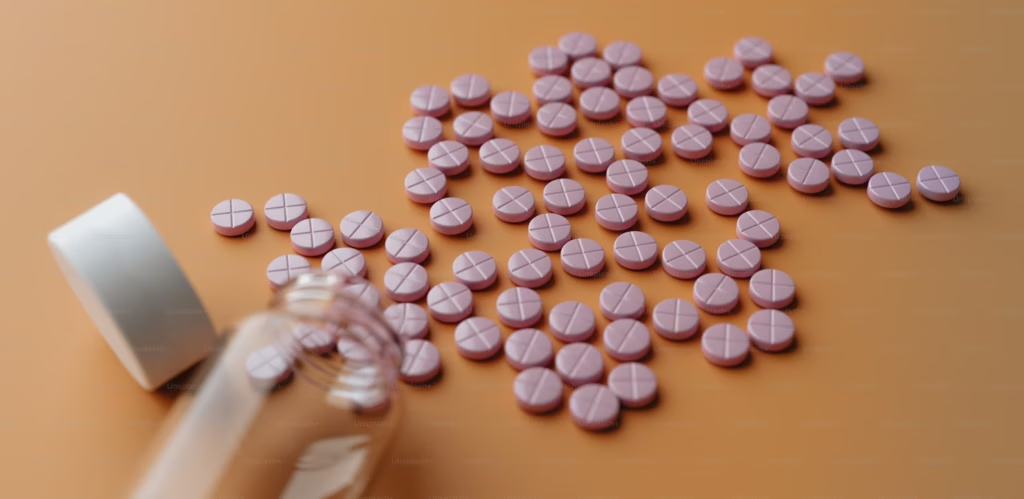
Introduction: An Old Drug With Modern Relevance
Colchicine has been used for centuries to treat gout flares, yet it remains one of the most misunderstood arthritis medications.
Today, this ancient extract from the autumn crocus is being rediscovered for its anti-inflammatory power beyond gout — from pericarditis to Behçet’s disease.
So how does colchicine work, when is it most effective, and what should patients watch for?
1. How Colchicine Works
Unlike painkillers that block prostaglandins, colchicine acts at a cellular level.
It binds to tubulin inside white blood cells, preventing them from migrating to inflamed joints.
This interrupts the “inflammatory cascade” triggered by uric-acid crystals or other stimuli.
✅ In short: Colchicine stops inflammation before it even starts.
2. Colchicine in Gout: Timing Is Everything
Colchicine works best when taken as soon as a gout flare begins.
Delaying treatment often makes it less effective and increases GI side effects.
| Phase | Typical Use | Dosage Example* |
|---|---|---|
| Acute flare | Start within 12–24 hours | 1.2 mg at onset → 0.6 mg one hour later |
| Prophylaxis | To prevent flares during uric-acid-lowering therapy | 0.6 mg once or twice daily |
📊 Evidence: A 2020 review in Arthritis & Rheumatology confirmed that early, low-dose regimens are as effective as older high-dose ones, with far fewer GI reactions.
*Always follow your physician’s instructions; doses may vary by region and kidney function.
3. Beyond Gout: Other Conditions Where Colchicine Helps
Modern research has expanded colchicine’s use far beyond joint disease:
- Pericarditis: Reduces recurrence of heart-lining inflammation.
- Familial Mediterranean Fever (FMF): Prevents life-threatening amyloidosis.
- Behçet’s disease: Eases arthritis and mucocutaneous flares.
- COVID-19-related inflammation: Studied for cytokine modulation (still investigational).
💡 This wide range of benefits stems from its universal anti-inflammatory mechanism — not uric-acid reduction.
4. Side Effects and Safety Precautions
The most common issue is gastrointestinal upset — nausea, abdominal pain, or diarrhea, especially with high doses.
At toxic levels, colchicine can affect bone marrow, liver, kidneys, or nerves.
| Risk Group | Adjustment Needed |
|---|---|
| Elderly / CKD patients | Lower dose or alternate-day schedule |
| Those on macrolide antibiotics (clarithromycin, erythromycin) | Avoid combination — increases toxicity |
| Liver disease or severe GI disorders | Use with caution |
🩺 Monitoring tip: Ask your doctor for periodic kidney and blood counts if on long-term therapy.
5. Drug Interactions to Know
Colchicine is metabolized by CYP3A4 and P-glycoprotein pathways.
Drugs like clarithromycin, verapamil, diltiazem, and cyclosporine can raise colchicine levels, leading to toxicity.
Avoid grapefruit juice for the same reason.
✅ Rule of thumb: Always disclose all medications to your healthcare provider before starting colchicine.
Frequently Asked Questions (FAQ)
Q1. How fast does colchicine relieve a gout attack?
🕐 Pain relief typically begins within 24 hours if started early.
Q2. Can colchicine be taken daily?
✅ Yes, at low doses (0.6 mg once or twice daily) for flare prevention, under medical supervision.
Q3. Is colchicine safe with kidney disease?
⚠️ Use cautiously. Dose adjustment or alternate therapy may be needed if eGFR < 50 mL/min.
Q4. Can I combine colchicine with NSAIDs or allopurinol?
✅ Yes. NSAIDs help immediate pain; allopurinol lowers uric acid. Colchicine prevents flares during allopurinol initiation.
🩺 Expert Tip (E-E-A-T Boost)
“In rheumatology, colchicine remains one of the most versatile and cost-effective anti-inflammatory drugs.
Starting it early in a flare — and using low doses consistently — gives excellent results with minimal side effects.”